What should the price include so proposals can be compared?
The price should show which work is included, excluded, or covered by an allowance. An allowance is a budget assigned to an item not fully selected; the proposal should explain what it covers and how the final selection changes the total.
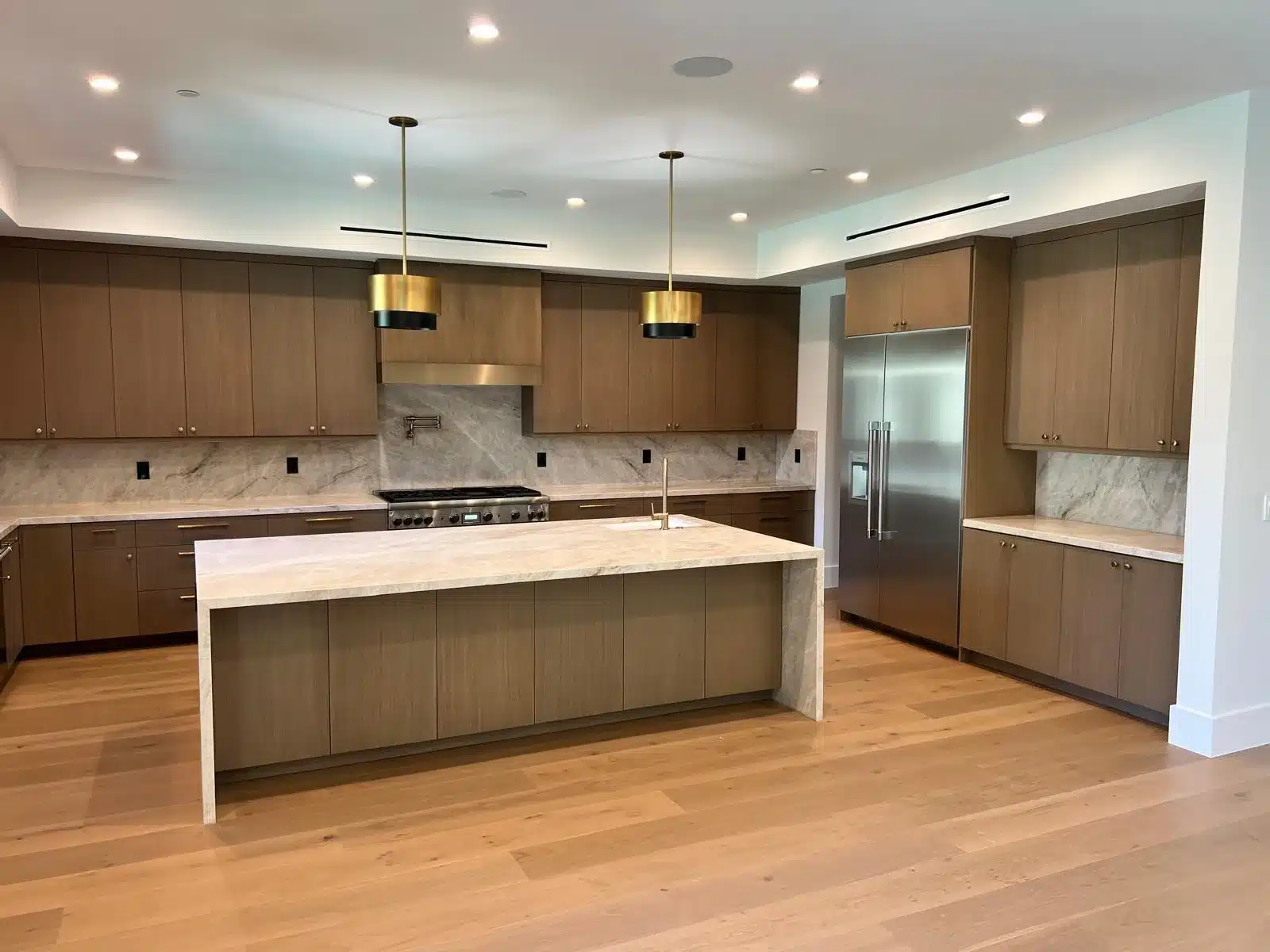
A finished appearance is only part of the pricing scope. Our Palos Verdes kitchen remodel provides a finished-project reference with wood cabinetry, a waterfall-edge island, veined surfaces, and brass-toned pendant lighting.
- Cabinet and island work: compare the extent of cabinetry, finish specifications, storage details, and island installation rather than counting cabinets alone.
- Surface work: check countertop and backsplash products, fabrication, edges, coverage, and installation.
- Appliances, lighting, and flooring: separate product purchases from delivery, preparation, installation, and connections.
- System changes: identify plumbing and electrical relocation separately from replacing fixtures or appliances in place.
- Permit-related services: distinguish design, engineering where needed, submissions, correction responses, and agency fees.
- Existing conditions and scheduling: identify assumptions about concealed conditions, material availability, and work sequencing. Require a written method for pricing and approving changed scope before it proceeds.
What schedule details should be in writing?
The schedule should identify stages and dependencies, not just an unexplained completion date. Separate design, product selection, applicable permit submission, correction responses, procurement, construction, inspections, and final sign-off.
Clarify what makes the proposed start date possible. Cabinet dimensions may depend on appliance selections, and installation sequencing may depend on product delivery. Agency review, concealed conditions, and specialty-trade coordination can also affect progress.
Ask which dates are estimates, which homeowner decisions have deadlines, and how schedule changes will be communicated. Define what “completion” means in the proposal: installation work, remaining corrective items, and applicable final sign-off should not be treated as interchangeable milestones.
How should you compare kitchen remodeling proposals before signing?
Compare proposals against the same written scope, then resolve differences before choosing by price. Match products and allowances, permit handling, exclusions, payment milestones, schedule assumptions, change procedures, inspections, and closeout responsibilities. Request a revised proposal when a verbal explanation changes what is included.
Check the contracting entity and the current license status, classification, and scope. Under California contractor advertising rules, contractor advertising must include the required license number; the number alone does not establish authorization for every specialty. We hold California contractor license #1074505.
For covered compensated renovation in pre-1978 housing, EPA lead renovation rules require certified-firm and certified-renovator arrangements and prescribed work practices. Before signing, confirm how applicable requirements will be addressed and who is responsible. A general contractor license is not a substitute for those arrangements.
Keep the agreed specifications with the proposal so later selections and changes can be compared with the same starting scope. Unresolved exclusions or responsibilities deserve clarification before the total becomes your basis for a decision.