
Every trade — gas, electrical, concrete, shade structure — sequenced from the same drawing before any work begins. Multi-element outdoor living managed by one contractor of record under CSLB #1074505.
CSLB License #1074505
Itamar Ben Asulin on every project
Valley · Westside · South Bay
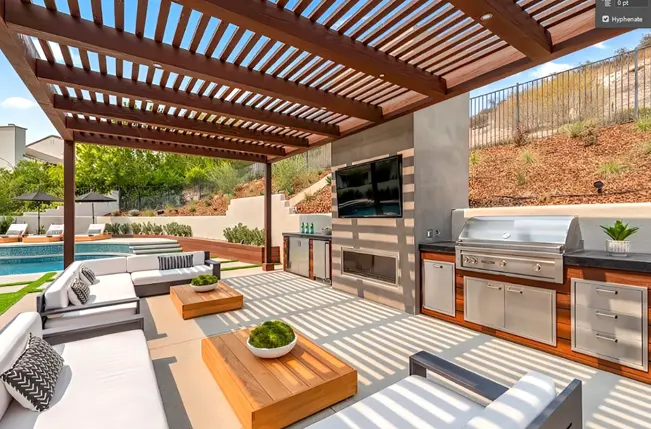
A custom outdoor patio space is a full design-build of a coordinated multi-element outdoor living area. This isn’t a concrete slab with furniture on top.
It’s an outdoor kitchen — a permanent exterior cooking station with a gas or electric cooking surface, storage, and a plumbing-connected sink — combined with a shade structure, a fire feature, and an integrated lighting system. Every element is planned, permitted, and built as a single project. IBA serves homeowners across LA County who want a year-round outdoor living space that functions as a unified whole — not a collection of separate installs. Learn more about our approach to patio design and installation in Los Angeles.
CSLB License #1074505 authorizes IBA Builders — a CSLB-licensed general contractor in Los Angeles — to pull the gas, electrical, and structural permits required for a multi-element outdoor build, all under one contractor of record. Homeowners can verify a contractor license with the CSLB before any project begins.
The six workstreams managed on every multi-element outdoor project — site assessment through final inspection — under one CSLB-licensed contract.
Gas line for the kitchen or fire feature is routed, permitted, and pressure-tested before the kitchen structure is built around it. Not after.
Outlet circuits, lighting conduit, and panel additions set in trenches before the concrete is poured. No trenching through finished concrete after the fact.
Pergola or shade structure positioning accounts for LA’s seasonal sun movement — southwest in summer, dropping steeply in fall. Not just visual proportion.
Setbacks from property lines and combustible structures confirmed against LA County fire code before any gas stub-out is placed.
Hardscape drainage planned into the slab layout alongside utility chases — not corrected after the patio is poured. Water doesn’t pull toward conduit.
Where people move, cook, and sit reviewed as a circulation plan before structural decisions. Materials selected for LA heat, UV, and coastal air where applicable.
Site assessment: drainage, utilities, setbacks, and sun angle relative to the planned kitchen and shade structure. Conflicts identified, single coordinated drawing produced that every trade will work from.
Plan check submission for structural shade, gas-fed fire features, and new electrical sub-panels. Architectural site plan, MEP rough-in drawings, and structural calcs prepared as one submission package.
Underground utility rough-ins first (gas, electrical conduit, drainage). Slab pour only after conduit is in position. Shade framing after slab cure. Kitchen framing after gas inspection. Lighting and finish last.
Walkthrough against approved drawings before requesting the final LADBS inspection. Any discrepancies corrected before the inspector arrives. Final sign-off confirms every element is code-compliant.
Los Angeles is one of the few places in the country where a high-investment outdoor space pays for itself in daily use — 200-plus days of usable outdoor weather, mild evenings through fall, and a culture built around backyard entertaining. From the Sherman Oaks office, we reach project sites across the San Fernando Valley, the Westside, South Bay communities, the Eastside, and the broader LA County service area. The afternoon sun angle in this region runs southwest in summer and drops steeply in fall — a shade structure positioned without accounting for that movement provides full shade in June and almost none in October. Our pergola and shade structure installation service covers these positioning decisions in detail. Hillside properties introduce additional complexity around sun angles and drainage — see hillside lot structural and permit considerations for what those builds require. Many projects pair with pool construction and outdoor entertainment builds for complete backyard scope.
The most common coordination gap on a multi-element outdoor project is that no single vendor owns the full picture. When the concrete, shade structure, and outdoor kitchen are each handled by a different company, each trade completes its portion correctly — but nobody owns the question of how those elements interact.
Shade structure posts can land exactly where the gas line was planned to run. A drainage slope that works for the slab can pull water directly toward the electrical conduit chase. The kitchen station can end up positioned where it functions in isolation but blocks every afternoon view from the patio seating area. That’s the coordination gap when trades build separate elements without a shared drawing: each trade is responsible for its own work, but nobody is responsible for how the finished space functions. Trade sequencing is a design-build responsibility that gets missed when there’s no single contractor coordinating it. Understanding what to check before hiring a contractor in LA helps homeowners avoid these fragmented outcomes. The same principle applies to garage and structural construction, where structural permits and multiple trades must align under one coordinated plan.
When IBA manages a custom outdoor patio in LA, every trade works from the same set of drawings. Gas line routing is on the same plan as shade structure post locations and drainage slope. If there’s a conflict between where the electrical conduit needs to run and where the pergola footing needs to go, we find it on paper — before the concrete is poured. The concrete crew doesn’t pour until the electrical conduit and gas line stub-outs are in their correct positions.
On a recent backyard outdoor living build in LA, the original layout had the outdoor kitchen facing west. That position made sense from a traffic flow standpoint — but a west-facing cooking station in LA means the cook is looking directly into afternoon sun during prime entertaining hours (roughly 4 to 7 PM when the marine layer hasn’t pushed in). We flagged it during the design coordination phase and rotated the station 90 degrees before any footings were placed. Small decision, large impact on how the space actually gets used. That coordination happens when every trade is working from the same drawing under one project plan.
Every element involving gas, electricity, or structural support requires its own permit in LA. An outdoor kitchen triggers a gas line permit — pressure-tested and inspected by LADBS before connection. A fire feature carries its own permit and must meet setback requirements from structures and property lines under LA County fire code. Outdoor electrical permits cover every new exterior circuit. The LADBS building permit requirements apply to each trade element. We hold CSLB License #1074505 and serve as the contractor of record for all permits — one license, one permit set, one inspection sequence in the right order. Pool scope makes single-drawing coordination even more critical — see pool construction for complete backyard builds.
Scope and integration. A standard patio install is concrete or pavers as the deliverable. A custom outdoor patio space is a multi-element design-build: outdoor kitchen, shade structure, fire feature, and integrated lighting all planned and built as a single coordinated project. The key difference is that every trade works from the same drawing — gas line routing on the same plan as shade structure posts and electrical conduit — so conflicts get caught on paper, not in the slab.
Yes. Any new or extended gas supply line serving the cooking station, a gas-fed fire pit, or fireplace requires a gas line permit in LA. The line must be pressure-tested and inspected by LADBS before connection. We pull the permit under CSLB License #1074505 and schedule the rough-in inspection before the kitchen structure encloses the line.
The afternoon sun in LA runs southwest in summer and drops steeply in the fall. A shade structure positioned without accounting for that movement provides full shade in June and almost none in October. We account for seasonal sun angle and wind direction during the design coordination phase — not after the posts are set. That’s a detail that doesn’t show up on a generic outdoor living quote.
It’s the planned order each contractor completes work. On a multi-element outdoor build the sequence runs: underground utility rough-ins first (gas, electrical conduit, drainage), concrete slab pour after conduit is confirmed in position, shade structure framing after slab cure, outdoor kitchen framing after gas inspection, electrical finish work after structural enclosure, and lighting and finish elements last. LADBS rough-in inspections are scheduled before any work is covered so the inspector can confirm gas and electrical placement before they’re enclosed.
Most multi-element outdoor builds run 12–20 weeks from permit issuance to final inspection, with another 4–10 weeks before that for design coordination, permit submittal, and LADBS plan check. Total elapsed time from first site visit to ready-to-use is typically 4–7 months. Hillside sites, fire features requiring extended setback engineering, or new electrical sub-panels add to the timeline. We give you a concrete timeline at the site visit once the scope is defined.
The first step is a site assessment — not a design presentation and not a sales call. We visit your property, evaluate the layout, and confirm what your outdoor kitchen and patio project requires in terms of permits, trade sequencing, and coordination. You leave the conversation with a clear picture of what the project involves before committing to anything.