
We determine your permit requirement by attachment method before a single material is ordered. Freestanding posts and footings, or attached to wall framing or roof ledger — the path forks at the site visit.
CSLB License #1074505
Itamar Ben Asulin on every project
Valley · Westside · South Bay
The first decision on any pergola project isn’t the material. It’s the attachment method.
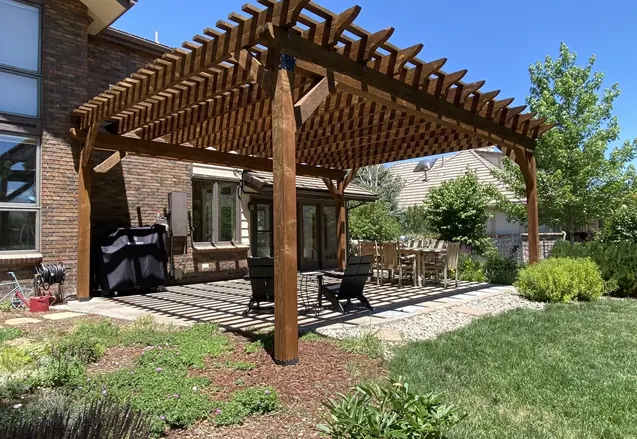
A freestanding pergola stands on its own posts and footings. It has no structural connection to your home. An attached pergola connects directly to your home’s wall framing, roof ledger, or eave — and that connection changes everything about the permit path.
IBA Builders installs both types across Los Angeles County. Before anything is quoted or ordered, we identify which type fits your space and whether a permit is required. That answer comes from the attachment method, the structure’s size, and your specific lot — not a general rule of thumb. If you’re also considering patio design and installation in Los Angeles, the same attachment-and-permit thinking applies to that planning process.
The six workstreams managed on every pergola project — attachment assessment through final inspection sign-off — under one CSLB-licensed contract.
Ledger board connections confirmed against solid framing — never siding or stucco alone. Required for any attached pergola before the ledger goes on.
Concrete footings for freestanding posts sized to LADBS minimums for the post height, span, and LA’s clay-heavy soils — not a default depth.
Wood pergolas built with dimensional or engineered lumber specified for outdoor exposure; aluminum systems selected from powder-coated, UV-resistant stock.
Attached vs. freestanding, size, height — the permit answer comes from your specific lot, delivered in writing before materials are ordered.
If a permit is required, IBA prepares and submits the application, manages plan check, and responds to corrections. You don’t chase the city.
If a permit is pulled, you receive a copy of the issued permit and final inspection sign-off at project close. Exempt projects walked with you on the day.
Attachment options for your exterior wall or yard configuration, lot constraints affecting freestanding placement, and permit threshold determination based on LADBS accessory structure rules — all decided here.
Permit required: IBA prepares, files, and manages plan check. Exempt: confirmed in writing before work begins. Either way, you start construction knowing exactly where you stand.
Attached pergolas: ledger board installed against verified solid framing before any overhead beam goes up. Freestanding: post footings dug to specified depth for post height, span, and lot soil conditions.
Permitted projects: final inspection scheduled and passed; sign-off documentation delivered. Exempt projects: walked with you before we leave the site. Either way, no surprises after the posts are set.
From the Sherman Oaks office we dispatch along the 101, 405, and 134 corridors — west to Malibu, Calabasas, and Woodland Hills; east to Pasadena, Silver Lake, and Echo Park; south through Culver City and the South Bay; north into the Santa Clarita Valley. Both incorporated city parcels and unincorporated county areas are served. The permit thinking isn’t just about size — a compact pergola bolted to a Craftsman in Highland Park raises different structural questions than a freestanding aluminum system installed on a flat lot in Northridge. Same thinking applies to the custom outdoor patio spaces we design and build — every project starts with how the structure relates to what’s already there.
The permit question comes up on more LA pergola projects than homeowners expect — and it’s answered at the site visit, not after the posts are ordered. The path forks at one specific decision: how the pergola attaches.
“A homeowner in Sherman Oaks wants an attached pergola connecting to the rear wall. They’ve picked a style online and they’re ready to go. The first thing I do isn’t pull out a tape measure — I look at the wall they want to attach to. Is it framed? Is there solid blocking where the ledger board needs to sit? A ledger has to be bolted into solid framing, not stucco or sheathing. Once that’s confirmed, I check footprint and height against the LADBS threshold. An attached pergola connecting to a wall or roof ledger becomes a structural modification to the dwelling. That triggers a permit. A freestanding structure on the same lot — same size, same materials — may not.”
— ITAMAR ASSULIN, OWNER, IBA BUILDERS
Skipping that assessment creates a specific problem — an unpermitted structural modification that surfaces during a future inspection at the time of sale. Identifying the permit requirement upfront takes about thirty minutes on site. It’s the most important thirty minutes of the project. The LADBS building permit requirements cover the threshold directly, and our permit management for outdoor structures covers submission and plan check from there. As a CSLB-licensed contractor serving Los Angeles, owner Itamar Ben Asulin oversees each project directly — verify any California contractor license with CSLB before signing on a structural project.
It depends on three things: attachment method, footprint, and height. An attached pergola that connects to a roof ledger or wall framing becomes a structural modification to the primary dwelling — that triggers a permit. A freestanding pergola on the same lot, same size, same materials, may not. We answer the permit question on every project at the site visit, in writing, before materials are ordered.
A freestanding pergola stands on its own posts and footings — no structural connection to your home. An attached pergola connects directly to your home’s wall framing, roof ledger, or eave. The difference matters because attachment creates a structural modification to the dwelling, which is what drives the permit path. Both types are valid options; the right one depends on where you want the pergola, how it relates to the house, and whether the wall behind it has solid framing where the ledger needs to land.
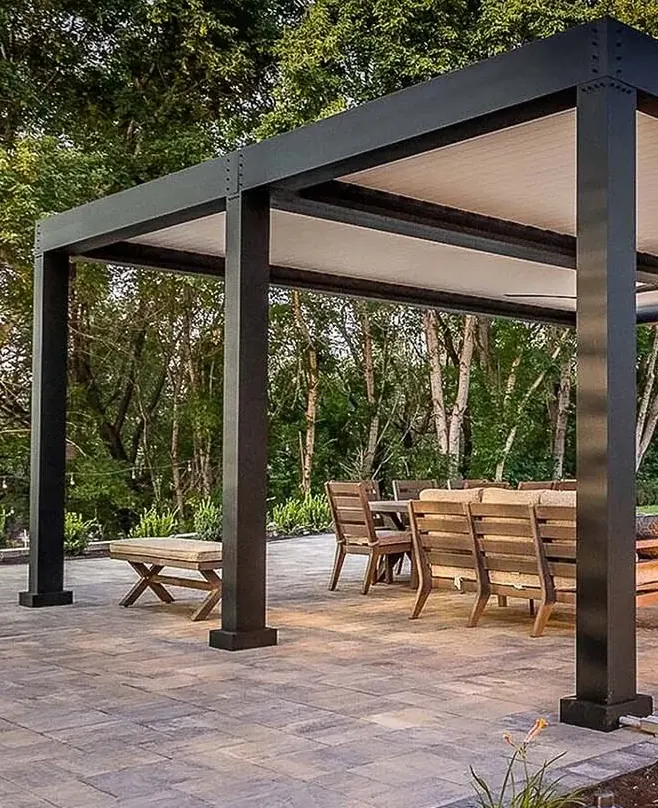
Both work well when specified for LA conditions. Wood pergolas use dimensional or engineered lumber rated for outdoor exposure. Aluminum systems are powder-coated and UV-resistant — appropriate for LA’s extended dry-season sun. Wood gives more visual character and natural feel; aluminum gives lower maintenance and faster installation. We walk through both at the site visit based on your aesthetic, maintenance preference, and the structure’s span.
Footings for freestanding posts are sized to LADBS minimums for the specific post height, span, and soil conditions on your lot. LA’s clay-heavy soils shift with seasonal moisture — that movement is accounted for in footing depth. There’s no single default depth; the right number comes from the engineering for your project’s parameters.
An exempt freestanding pergola can move from site visit to finished install in three to six weeks — the limit is usually material lead time. A permitted attached pergola adds the LADBS plan check window (typically 4 to 8 weeks depending on workload) before construction begins. We give you a concrete timeline at the site visit once the permit path is determined.
The first step is a site visit — not a commitment. Describe your space and let us know whether you’re thinking attached or freestanding. We’ll schedule the visit, assess the attachment options and permit requirements, and give you a clear picture of what the project involves before anything is quoted. Review what to verify before hiring a contractor in LA if you’d like to know what documentation a qualified contractor should provide upfront.