
Most LA ADU projects go through one to three LADBS correction cycles before the permit is issued — that’s the standard process, not a failure. We manage correction response within the city’s window so files don’t sit idle.

CSLB License #1074505
Itamar Ben Asulin on every permit
Valley · Westside · Eastside
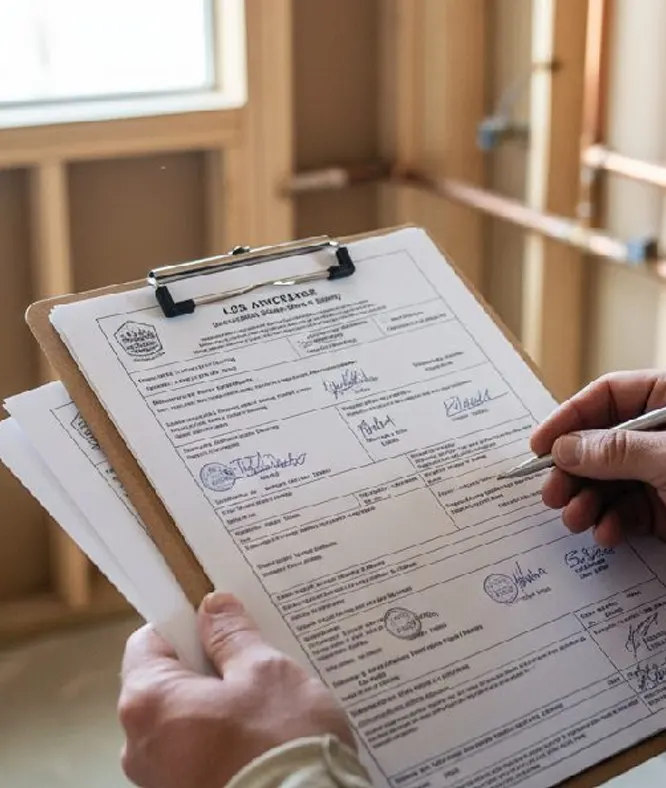
The 60-day review clock California law mandates doesn’t start on submission day. It starts when LADBS accepts your application as complete.
That distinction changes how a project should be prepared. Los Angeles is one of the most permit-intensive cities for residential construction in California, and the city applies a consistent compliance mechanism across a varied building stock. Understanding why LA ADU permits take longer than state law promises is essential context before your first submission.
From the CSLB-licensed contractor managing LA ADU permits office in Sherman Oaks, IBA manages submissions for Valley neighborhoods (Van Nuys, North Hollywood, Encino), Westside (Culver City, Mar Vista), and Eastside (Silver Lake, Glassell Park). The submission path through LADBS is consistent across the City of LA — what varies is how prepared the application is when it reaches a plan check engineer’s desk. For complete zoning context that affects feasibility, see LA ADU zoning rules by lot type.
Each phase has a name, a set of deliverables, and a realistic timeline range. Knowing the sequence is how you hold a contractor accountable — and how you recognize a correction notice as routine instead of catastrophic.
Site plan, floor plan, title report, and proof of existing utility service. Missing one means the application is rejected before review begins. Most delays start here, not at plan check. LADBS ADU application portal.
Architectural plans, structural calculations, Title 24 energy compliance report, and site plan with setbacks. Simpler projects (standard garage conversions, JADUs) may qualify for Over-the-Counter approval — single-visit review.
Written comments from the plan check engineer identifying code deficiencies or missing items. Most ADU projects run 1–3 rounds. You don’t fail a correction — you respond to it within the city’s window.
After the final correction cycle is resolved, LADBS issues the building permit. This is the authorization to begin construction. No work begins before this document is in hand.
Defined order: foundation, framing, rough-in MEP (mechanical/electrical/plumbing), insulation, final. Each must pass before the next phase of construction begins. Each is documented against the permit.
The final document confirming all work matches approved plans and meets code. Legally required before any tenant can occupy the new unit. Marks the end of the permit lifecycle.
The permit timeline isn’t a fixed number — it’s the sum of how each phase was prepared and handled. Four variables consistently shift the total.
Properties in Very High Fire Hazard Severity Zones (VHFHSZ) route to LAFD for separate review before LADBS completes plan check. Adds 2–6 weeks outside the city’s 60-day obligation. Common in Silver Lake, Glassell Park, and Bel Air hillsides.
An incomplete submission doesn’t enter the queue — it gets returned. The 60-day clock doesn’t start until LADBS accepts the application as complete. A single missing document resets the timeline by weeks.
One correction round with a fast, complete response adds 3–4 weeks. Three rounds with delayed responses can add 12+. Response speed is one of the few timeline variables a contractor directly controls.
Utility connection scheduling runs parallel to the permit process and can add 4–12 weeks AFTER the building permit issues. A frequent source of move-in delays for homeowners who thought permit issuance was the last step.
A pre-application package assembled correctly is the single biggest variable you control before LADBS touches your file. After that, the timeline is the sum of phase preparation and response speed.
The ranges in the panel reflect what IBA Builders typically sees on ADU permit submissions across LA County under CSLB License #1074505. They aren’t minimums and they aren’t maximums — they’re the realistic operating window for a well-prepared submission with average correction volume.
A few timeline patterns worth knowing. An incompleteness rejection at submission resets the clock by 3–6 weeks before review even begins. A single lapsed correction response window pushes the file back into the general queue, costing another 2–3 weeks on average. And LADWP / SoCalGas connection scheduling is parallel to LADBS, not after — meaning the utility queue should be initiated as soon as the building permit issues, not weeks later when the homeowner realizes occupancy is blocked.
The numbers in this panel are what should be in every honest contractor conversation about timeline. If a quote promises a permit-to-occupancy timeline that skips one of these line items, the math doesn’t add up.
Only a licensed contractor can legally pull ADU permits in California — and the license number tells you who is accountable. The contractor of record is legally responsible for the work: if corrections are issued, the response goes through them; if an inspection fails, the remedy goes through them; if the permit lapses, they’re on record.
IBA Builders holds CSLB License #1074505. Itamar Ben Asulin is named on every project. You can verify a California contractor license with CSLB at cslb.ca.gov before the first site visit — that’s a verification mechanism that works in your favor as a homeowner. Every permit IBA files lists us as the contractor of record. The homeowner doesn’t interpret city correspondence or track submission status independently. That’s our responsibility under the license. For the full permit-services scope, see our ADU permit services in LA County.
When LADBS accepts your application as complete — not on submission day. This is the single most misunderstood part of the permit process. If your pre-application package is missing a site plan, floor plan, title report, or utility confirmation, LADBS returns the application before logging it. The 60-day clock doesn’t begin until acceptance. A single missing document can reset the timeline by 3–6 weeks before review even begins.
No — it’s the standard process. Most LA ADU projects go through one to three correction rounds. Each cycle is a round of written comments from the plan check engineer identifying code deficiencies or missing items. You don’t fail a correction; you respond to it. The variable that matters is response speed: a correction handled within the city’s window adds 2–4 weeks; a lapsed response pushes the file back into the general queue, adding more.
OTC is a streamlined LADBS review path where plans are reviewed and approved in a single visit rather than going through the standard 4–8 week plan check queue. Eligibility depends on project type and scope — simpler projects like standard garage conversions and JADUs are most likely to qualify. New detached builds and anything with structural complexity (hillside, VHFHSZ, non-standard foundation) typically don’t qualify. We evaluate OTC eligibility at the pre-application stage on every project.
Very High Fire Hazard Severity Zone — a state-designated area where wildfire risk is highest. Common in Silver Lake, Glassell Park, Bel Air, parts of Brentwood, Pacific Palisades, and Tarzana hillsides. If your property sits in a VHFHSZ, the permit application routes to the LA Fire Department for separate review before LADBS can complete plan check. That routing adds 2–6 weeks outside the city’s 60-day obligation. Fire-hardened assemblies may add material cost too.
Because their connection queues are parallel to LADBS, not after. The Department of Water and Power and SoCalGas operate independently from the building department. Once your building permit issues, the utility connection request enters its own queue — typically 4–12 weeks before the connection is actually completed. This is the most frequent source of move-in delays for homeowners who assumed the building permit was the last step. We initiate utility scheduling as soon as the permit issues, not weeks later when occupancy is already being blocked.
If you’re evaluating contractors and their permit timelines don’t add up to what you’ve read here, that’s useful information. Tell us your address and project type — we’ll confirm your lot’s permit path and walk through what LADBS will require. No commitment needed to have that conversation. For homeowners ready to move forward end-to-end, we offer full ADU construction services in LA so permits and build stay under one accountable team.