
Concrete slabs and paver bases built for LA clay soil — drainage slope confirmed against your foundation grade before the first form is set. Subbase compacted in lifts, expansion joints placed correctly, permit status confirmed before excavation.
CSLB License #1074505
Itamar Ben Asulin on every project
Valley · Westside · South Bay
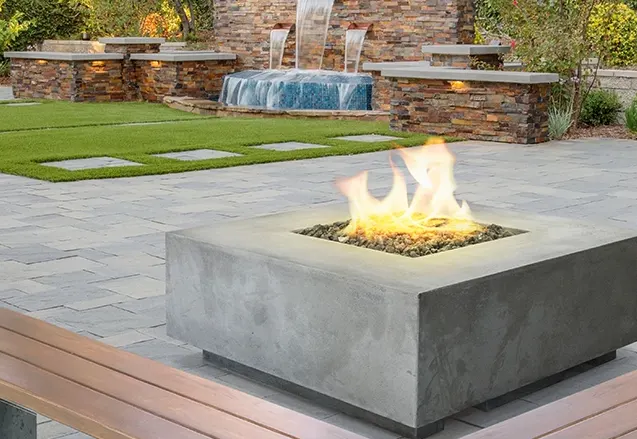
Patio installation means more than choosing a surface material. It means building a ground-level hardscape slab or paver field that moves water away from your home — not toward it.
IBA Builders designs and installs residential concrete and paver patios across Los Angeles County with drainage slope planning on every job. The scope covers site assessment, subbase preparation, drainage slope confirmation, custom outdoor patio design options, and permit management for the slab itself. From first site visit to finished surface, one contractor manages the whole process.
CSLB License #1074505 — verify the CSLB contractor license at any time — authorizes us to perform concrete flatwork and pull applicable permits through LADBS. As a CSLB-licensed contractor serving Los Angeles County, owner Itamar Ben Asulin has led patio and outdoor hardscape projects across LA County since founding IBA in 2020.
The six workstreams applied on every concrete and paver patio project — site assessment through final water test — under one CSLB-licensed contract.
Minimum 1/8 inch per foot directed away from your home’s foundation grade — confirmed on-site, not estimated from a plan.
Gravel or crushed aggregate sub-base compacted in lifts on LA clay-heavy soil — confirmed with a plate compactor, not a single pass.
Placed at intervals matched to slab dimensions and LA’s seasonal temperature range. Concrete moves — the joints are where it moves safely.
Permit threshold reviewed before any excavation begins. Permit filed where required, documentation provided at project close.
Broom finish for traction, exposed aggregate for visual character — both options explained at the site visit and matched to use and maintenance preference.
Sand bedding screeded to grade, pavers set and locked with edge restraints, final compaction after set — the standard paver assembly sequence, no shortcuts.
First visit covers lot grade, existing drainage path, soil conditions, and permit threshold review. Footprint confirmed against setback. Any trench drain requirement identified before the slab is poured.
Excavation to correct depth for the chosen surface. On clay soil, depth accounts for subbase compaction plus finished surface thickness. Subbase compacted in lifts. Forms set to confirmed drainage slope.
Concrete mix design selected for LA temperature range; pour timed to avoid peak heat. For pavers, sand bedding screeded to grade, pavers set and locked with edge restraints, compacted after set.
After installation, drainage direction confirmed by water test — we direct water at the surface and verify it moves to the intended drainage point. Permit sign-off documentation delivered at close.
From the Sherman Oaks office on Ventura Blvd, our crews reach residential properties across the San Fernando Valley (Encino, Sherman Oaks, Studio City, Tarzana, Van Nuys), the Westside (Brentwood, Santa Monica, Culver City), the South Bay, the Eastside, and hillside neighborhoods including Silver Lake, Los Feliz, and Bel Air. Zip codes we work in regularly include 90049, 90066, 91403, 91604, and 90039, among others throughout the county. Valley flatlands and hillside properties in the Santa Monica Mountains call for different drainage approaches — flat lots get drainage slope engineered into the slab; sloped lots get positive slope confirmed against the foundation line. For the structural side, see hillside lot drainage and structural considerations. Many patio projects also include pool deck and surrounding hardscape construction as part of a broader backyard scope.
Los Angeles sits on expansive soil — clay that swells when wet and shrinks when dry. A patio slab or paver base poured without accounting for that movement will crack, shift, or heave. That’s not a material failure — it’s a base preparation failure.
“On LA clay soil, a flat slab poured without a drainage plan performs well for months — until the rainy season arrives and water pools against the house. Clay drains slowly, sometimes not at all in the first 24 hours after a storm. That pooling sits against the foundation edge and works its way under the slab over time. The assessment I run on every project identifies three things before design begins: existing foundation grade, current drainage path, and whether a trench drain is needed at the patio edge. That assessment happens on-site. It cannot be estimated from a photograph.”
— ITAMAR ASSULIN, OWNER, IBA BUILDERS
Most ground-level concrete slabs and open paver patios in LA fall below the LADBS permit threshold. But permit review is required when the slab is tied to a new drainage system, involves grading that exceeds allowable limits, or is being installed as the foundation for a structure that itself requires a permit — like a pergola installation over your new patio. Where review is needed, the LADBS building permit requirements for patio slabs are addressed through our permit management process for outdoor structures — submitted before work starts. Patios often anchor a broader hardscape scope including concrete flatwork for driveways and approach slabs.
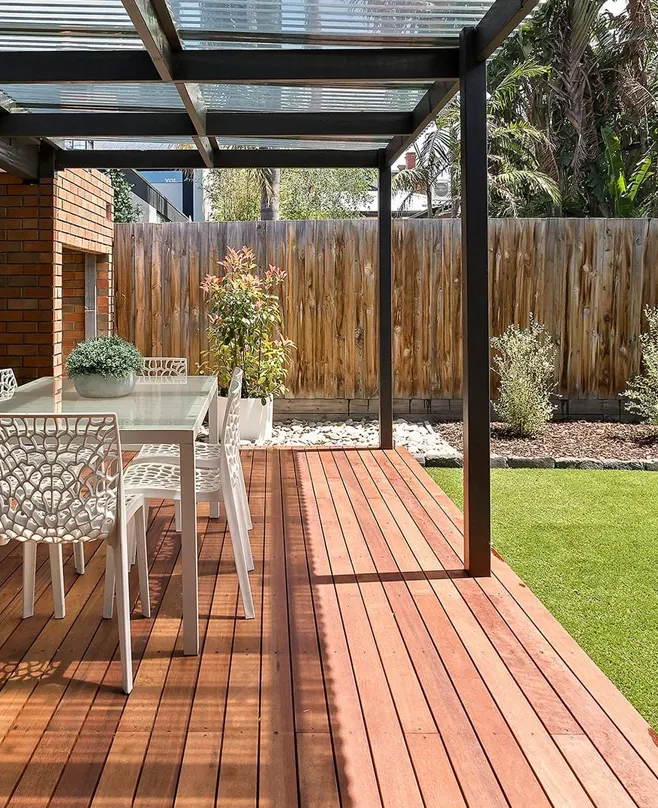
This page covers ground-level patio slabs and paver fields. Covered patios, pergolas, and attached shade structures involve a separate permit pathway and construction scope — covered in our outdoor structure pages.
Most open, uncovered concrete slabs at grade level fall below the LADBS permit threshold for residential flatwork. Permit review is triggered when the slab connects to a permitted structure, involves regulated grading, or is tied to a drainage system that requires city inspection. IBA Builders confirms permit status on every project before excavation begins.
LADBS guidelines and standard concrete flatwork practice call for a minimum slope of 1/8 inch per foot directed away from the home’s foundation. On flat Valley lots, that slope is engineered into the form layout before the pour. IBA confirms the slope with grade verification on-site — not from a plan estimate.
Expansive clay soil shrinks and swells with seasonal moisture changes. A slab poured without adequate subbase compaction or correctly placed expansion joints will move with the soil, eventually cracking at the weakest point. Proper base preparation — compacted in lifts, not in a single pass — is what separates a slab that holds for decades from one that fails in the first dry-wet cycle.
A broom finish is the standard residential concrete finish — the slab surface is dragged with a broom while wet, creating fine ridges that improve traction underfoot. Exposed aggregate is a decorative finish where the top layer of cement paste is washed away before cure, revealing the stone aggregate beneath. Exposed aggregate requires slightly more maintenance but offers more visual character. IBA explains both options at the site evaluation stage.
IBA installs both concrete slabs and paver systems. The subbase preparation process is similar for both, but paver installation requires a screeded sand bedding layer, edge restraints, and final compaction after the pavers are set. The surface material choice is discussed and finalized during the site evaluation based on your use case, drainage conditions, and aesthetic preference.
IBA serves residential properties throughout Los Angeles County, including the San Fernando Valley (Encino, Sherman Oaks, Studio City, Tarzana, Van Nuys), the Westside (Brentwood, Santa Monica, Culver City), the South Bay, the Eastside, and hillside neighborhoods including Silver Lake, Los Feliz, and Bel Air. Our Sherman Oaks office serves as the base for all county project work.
Contact IBA Builders and we’ll schedule a site visit — no plans required, no commitment asked. The first conversation is a site assessment: we look at your lot, confirm drainage conditions, and give you a clear picture of what your concrete or paver patio project requires before any design work begins. Review what to verify before hiring a contractor in LA first if you’d like to know what credentials a qualified contractor should provide upfront.