
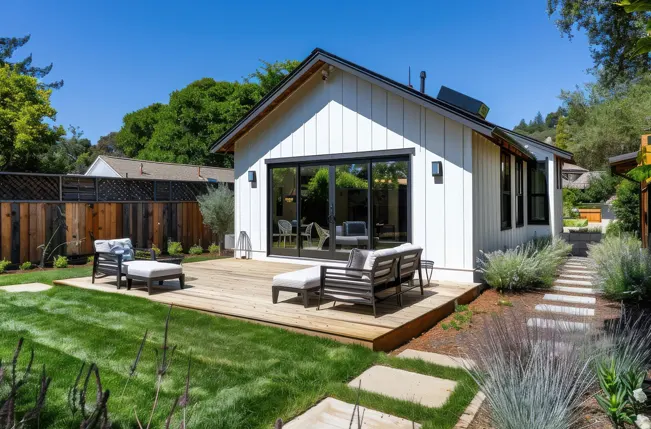
We assess water, sewer, gas, and electrical routing distance before your detached ADU is designed. Setback envelope confirmed, foundation type selected to soils, and LADWP/SoCalGas connection timelines built into the project schedule.
CSLB License #1074505
Itamar Ben Asulin on every project
Valley · Westside · South Bay
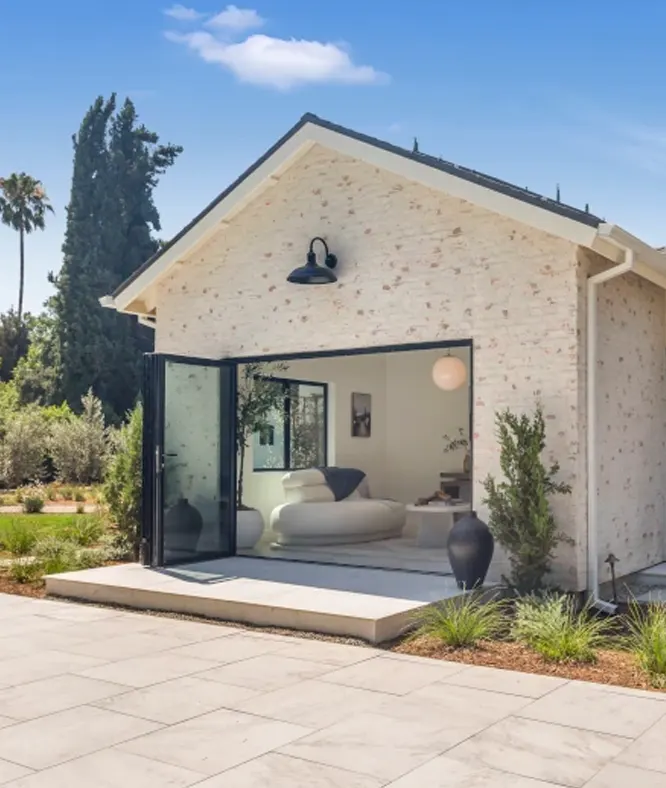
A detached ADU is a fully freestanding unit — its own foundation, its own walls, its own utility connections. No shared wall, roof, or foundation with the primary home.
It’s the most flexible ADU type available to LA homeowners — sits on its own concrete foundation, has its own front door, and requires its own utility service laterals (underground pipes and conduit connecting the unit to city water, sewer, gas, and electrical). If you’re weighing a detached ADU vs. garage conversion on your lot, the freestanding option gives you the most placement flexibility.
IBA Builders manages every phase through our full-service ADU construction in Los Angeles — utility mapping before design, LADBS permit submission and correction cycles, and the full construction sequence through certificate of occupancy. CSLB License #1074505 — you can verify any California contractor’s CSLB license directly through the state board. Serving all of LA County since founding IBA in 2020.
The six workstreams managed on every detached ADU project — soils to certificate of occupancy — under one CSLB-licensed contract.
Slab-on-grade, raised wood frame, or concrete perimeter wall — selected based on soils report findings, lot slope, and ADU footprint. Not picked off a default.
Current LAMC setback requirements (4-foot rear and side under AB 68) confirmed against your specific lot before design begins — no post-permit redesigns.
Water, sewer, gas, and electrical mapped and routed before drawings are prepared. LADWP and SoCalGas connection timelines built into the project schedule.
Pre-application document prep, plan set submission, correction response, and inspection scheduling — all under CSLB License #1074505 as contractor of record.
New independent lateral or connection through the primary home’s existing lateral — approved by LADBS and LADWP/SoCalGas before construction begins, not after.
Final LADBS sign-off confirming all work matches approved plans and meets code — required before any tenant can legally occupy the unit. Delivered at project close.
Site-specific utility mapping assessment: existing water, sewer, gas, electrical connection points located; routing distances calculated; foundation type confirmed against soils. Permit history pulled from LADBS.
Architectural plans, structural calcs, Title 24 energy compliance, and site plan with setbacks submitted as one LADBS package. We file the complete plan set under CSLB License #1074505.
Most detached ADU projects go through one to three LADBS correction cycles before permit issuance. Once issued: foundation, framing, rough-in MEP, insulation, drywall, finish — each inspection scheduled as soon as the prior phase completes.
Final LADBS inspection confirms all work matches approved drawings. LADWP completes electrical and water connections after final. SoCalGas connects on its own schedule. Certificate of occupancy issued after all inspections pass.
Dispatching from the Sherman Oaks office on Ventura Blvd, we build detached ADUs on lots throughout LA County — single-family parcels in the 818 zip codes of the San Fernando Valley, properties along the 10 and 110 corridors near the Eastside, and South Bay lots in the 90s zip codes where rear yard configurations vary widely. Incorporated cities and unincorporated county areas alike, from Burbank and Glendale in the north to Long Beach and Torrance in the south, from Culver City and Santa Monica on the Westside to East LA, Boyle Heights, and El Sereno on the Eastside. Lot configurations vary widely — slope, drainage, and structural realities of building on LA hillside lots all affect ADU placement decisions.
Utility lateral costs are the variable most homeowners discover after the first estimate arrives — we put them in before design begins. Because routing distance is determined by your lot, not by the design.
“I’ve looked at enough detached ADU projects in LA County to know where the budget surprises come from. Nine times out of ten, it’s not the framing. It’s not even the permit fees. It’s the utility service laterals. On a flat Valley lot where the main home’s sewer connection runs along the rear property line, the ADU connection is short — maybe forty feet, maybe less. But I’ve been on lots in Silver Lake and Glassell Park where the existing sewer exits the front of the primary home and the planned ADU is in the rear corner — the trench to make that connection crosses the entire property. That’s not a small cost difference.”
— ITAMAR ASSULIN, OWNER, IBA BUILDERS
What we do at IBA Builders is conduct a utility mapping assessment on your lot before the ADU design is finalized. We identify the existing water, sewer, gas, and electrical connection points. We calculate the routing distance from those points to your planned ADU location. We confirm whether a new service lateral is required or whether the detached unit can connect through the primary home’s existing infrastructure. Both LADBS and LADWP must approve the connection configuration. LADWP’s approval process for electrical and water service runs on its own timeline — typically four to twelve weeks after the building permit is issued. We account for that in the project schedule. The result: utility lateral costs are in your estimate before construction begins. Not after.
The 4-foot setback rule under California AB 68 is now law — that changes what your lot can actually hold. On a 7,500 square foot lot with standard rear yard depth, the rule often opens up meaningful ADU footprint options that weren’t available before. We verify your specific setback envelope at the pre-design stage. Most detached ADU projects go through one to three LADBS correction cycles before permit issuance. Our ADU permit services in LA County cover the full submission and correction cycle from pre-application through final approval, following all LADBS ADU permit requirements and guidelines. We respond within the review window so the queue never restarts. For deeper detail on what a detached ADU costs in LA and what to expect from the LADBS permit process, our resource pages go deeper.
Routing distance. A detached ADU needs its own underground connections for water, sewer, gas, and electrical. The cost depends on where those existing service points are on your lot relative to where the ADU will sit. On a flat Valley lot where the sewer connection runs along the rear property line, the trench is short — maybe 40 feet. On a lot where the existing sewer exits the front of the primary home and the planned ADU is in the rear corner, the trench can cross the entire property. We assess this on-site before design so the estimate reflects your actual lot.
Under California ADU law (AB 68), new detached ADUs must maintain a minimum 4-foot setback from rear and side property lines — reduced from prior minimums that were larger. On a 7,500 sq ft lot with standard rear yard depth, the rule often opens up meaningful ADU footprint options that weren’t available before. We verify your specific setback envelope against current LAMC requirements at the pre-design stage.
LADWP’s approval process for electrical and water service connections typically runs four to twelve weeks after the building permit is issued. SoCalGas runs on its own schedule for gas connection. We account for these timelines in the project schedule from the start — not as a surprise at the end.
It depends on lot configuration, existing garage condition, and how much square footage you want. A detached ADU gives you the most placement flexibility and can be larger than a garage conversion. A garage conversion reuses an existing structure, which can be faster and lower-cost — but only if the garage is in usable condition (footing depth, ceiling height, code compliance for habitable space). We compare both at the site visit based on your specific lot and goals.
After the certificate of occupancy is issued. That happens once the final LADBS inspection confirms all work matches the approved drawings and meets code, AND LADWP has completed the utility service connection. Until both are in place, the unit isn’t legally occupiable — even if construction looks finished. Most detached ADU projects go through one to three LADBS correction cycles during plan check, then construction takes another 5–8 months depending on scope.
The first step is a site visit — no finalized plans, no budget commitment required. We’ll visit your property, map the utility connection points, confirm your buildable setback envelope, and give you an accurate picture of what a standalone ADU construction project on your specific lot involves. That’s the conversation that makes everything after it accurate.