
We measure your legal buildable footprint before any garage design is drawn — setbacks, alley dedications, and zoning calculated on your specific parcel. CSLB License #1074505 for accessory structure permits.
CSLB License #1074505
Itamar Ben Asulin on every project
Valley · Westside · South Bay
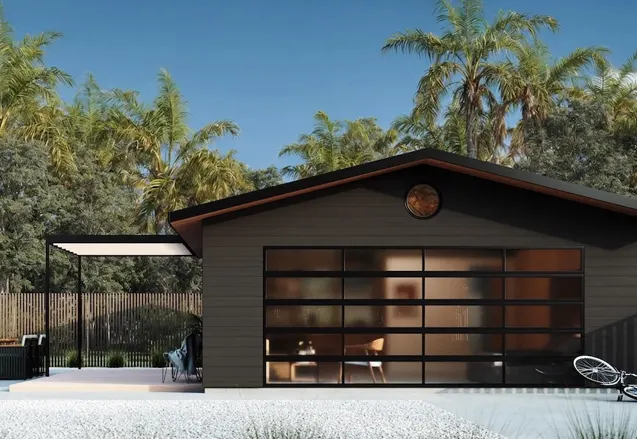
The garage type you can build depends on what your lot legally supports. New garage construction in LA means building from the ground up — foundation, framing, roofing, electrical, door, and full permit management through final sign-off.
An attached garage shares at least one wall with the primary dwelling and requires a fire-rated wall assembly — a wall system tested to resist fire for a specified period — between the garage and any living space under California residential code. A detached garage is a freestanding structure on its own foundation with its own roofline and no shared wall with the home.
The structural requirements differ. The permit path differs. And on many LA lots, the available footprint after setback deductions determines which option is buildable at all. We answer that question first — before any design is drawn, any permit is filed, or any money goes toward plans. Our accessory structure permit management covers the LADBS process end-to-end, and you can review the LADBS accessory structure permit requirements directly.
Some homeowners who start this process also discover they’d prefer to convert an existing garage into an ADU instead — an option worth understanding before committing to a new build.
From buildable-footprint calculation through final LADBS inspection — each phase scoped, documented, and inspected before the next begins.
Side-yard setbacks, rear-yard setbacks, alley dedication, and zoning designation calculated on your specific parcel — not estimated from a neighbor’s project or a zip code lookup.
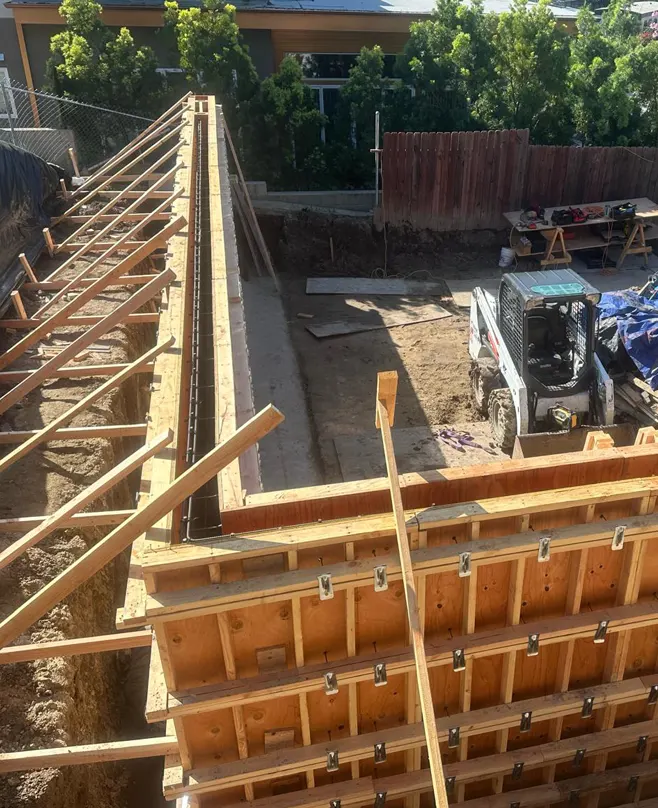
Minimum 3.5 inches of concrete with rebar or wire mesh reinforcement, per LA Building Code. Expansive clay soil prep added where lot conditions require it — we don’t skip subbase prep.
Wall framing, roof framing, exterior sheathing, and weather barrier installation. Header span at the door opening engineered for the door width — 16 feet for a typical two-car.
Interior lighting, outlets, and subpanel connection where applicable, roughed in before drywall — inspected by LADBS before closure.
For attached garages: code-rated framing with Type X drywall on the garage side, no compromising penetrations. Inspected as its own milestone before wall closure.
Header, tracks, hardware, opener. The door opening width determines the header span above it — engineered as part of the structural submittal to LADBS.
Side yard setbacks, rear yard setbacks, alley dedication, and zoning designation pulled on your parcel. Maximum garage footprint calculated before any design discussion.
Attached or detached configuration sized to confirmed footprint. Door placement, electrical layout, and structural drawings prepared. Accessory structure permit submitted complete through LADBS.
Slab-on-grade poured to engineered spec. Framing, roofing, sheathing. Electrical rough-in inspected. Fire-rated wall assembly inspected separately on attached projects. Garage door installed.
LADBS final inspection confirms every dimension and assembly matches approved plans. Sign-off legally documents the accessory structure in the public permit record.
Some homeowners arrive after spending money on architectural plans for a garage that doesn’t fit the available space. The plans look right on paper. Nobody measured the actual buildable area against the side yard, rear yard, and alley dedication before the design was finalized.
“I’ve reviewed lot configurations across LA County where a homeowner was ready to build a two-car detached garage — only to find during our lot assessment that the available rear yard, after deducting the required side and rear yard setbacks and accounting for an alley dedication, legally supported a one-car footprint. That math has to be done on your specific parcel, not estimated from a neighbor’s project.”
— ITAMAR ASSULIN, OWNER, IBA BUILDERS
IBA Builders holds CSLB License #1074505 — the state credential required to pull accessory structure permits through LADBS and act as contractor of record on residential garage construction. Before committing, you can always verify a California contractor license through the state. We submit accurate packages the first time, which reduces correction cycles — less time between permit submission and permit issuance. If you’re weighing the choice between building new and converting what you have, our breakdown of a detached build versus garage conversion on your LA lot reflects what your parcel actually supports.
It depends on your lot configuration and what you want from the space. Attached garages cost less in foundation and roof work because they share at least one wall with the home — but they require a fire-rated wall assembly between garage and living space under California residential code. Detached garages are freestanding with their own foundation and roofline; they often qualify for a reduced rear-yard setback allowance, which can mean more buildable depth on the right lot. We confirm which is feasible on your specific parcel before discussing design.
An alley dedication is a strip of land along the rear of some LA lots reserved for public alley access. It reduces the effective rear-yard depth available for construction. On an alley-fronting lot, a homeowner planning a two-car detached garage may find the alley dedication shrinks the buildable envelope enough that only a one-car structure fits legally. We pull the dedication measurement during the lot assessment, before any design work begins.
California residential code requires the wall between an attached garage and any habitable room in the primary home — including rooms above the garage — to meet a fire-resistance rating. The assembly typically uses Type X drywall on the garage side, code-rated framing, and no penetrations that compromise the rated assembly. LADBS inspects this wall as its own milestone before it’s closed up — it doesn’t get folded into the framing inspection.
Variable, but usually faster than a habitable room addition because the plan check scope is smaller. The biggest variable is whether the package is submitted complete on the first try. An incomplete or inaccurate submittal triggers correction notices that add weeks to the queue. We submit complete packages with site plan, structural drawings, and setback callouts that reflect actual lot conditions — which reduces correction cycles.
The door opening width. A standard two-car door is typically 16 feet wide, which requires a properly engineered header to carry the load above the opening. That header specification is part of the structural drawings submitted to LADBS. On an attached garage, the door header also interacts with the roof framing of the primary home — that connection point gets reviewed by the structural engineer before framing begins.
The first step is a lot assessment — not a design conversation. You don’t need architectural plans, you don’t need a budget number. You need your property address and a clear idea of what you want to build. Many homeowners also pair their garage build with concrete driveway installation — a natural next step once the structure is in place.