
We pull your LADBS permit history before any new addition work is designed — at no charge. Unpermitted prior work surfaces during title searches and home inspections; finding it first changes what the project costs and how long it takes.
CSLB License #1074505
Itamar Ben Asulin on every project
Valley · Westside · South Bay
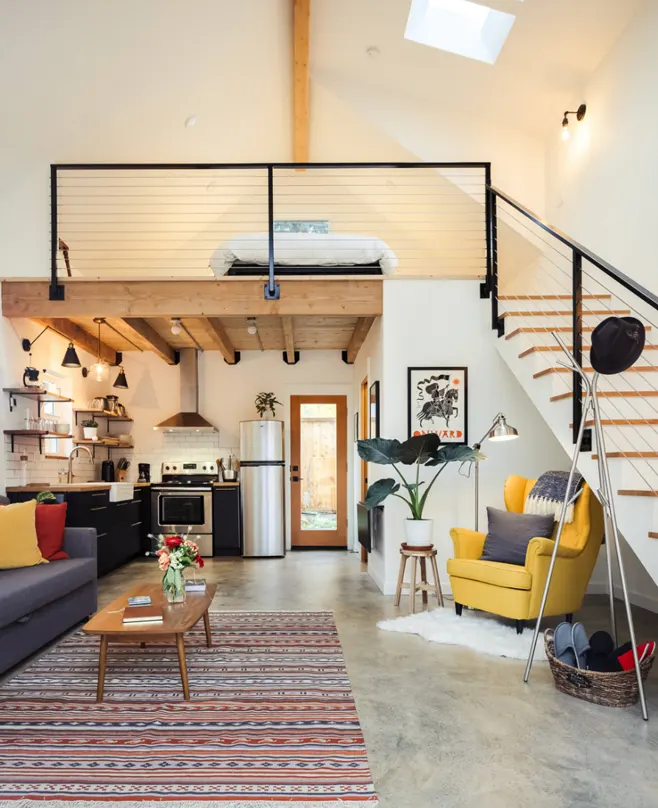
A room addition is new enclosed living space built directly onto your existing home. That definition covers more ground than most homeowners expect — pushing an exterior wall outward, enclosing a covered patio, or building above part of your current footprint.
Each approach has a different structural scope and triggers a different permit path through LADBS. The right type depends on your lot, not just your preference.
A bump-out addition extends one or more exterior walls outward and works on lots with available rear or side yard depth. An in-fill addition converts an existing covered but unenclosed space — a patio, breezeway, or carport — into interior square footage, often faster and less expensive. A second-story addition changes the structural equation entirely, requiring evaluation of the existing foundation and wall framing for load capacity.
For homeowners weighing how far to take a project, reviewing the home extension options for Los Angeles properties helps clarify where a room addition ends and a larger scope begins. IBA Builders holds CSLB License #1074505 — the credential required to pull addition permits and act as contractor of record on structural residential work in California. Owner Itamar Ben Asulin is involved directly on every project.
The sequenced standard applied to every room addition we build — six workstreams managed as one project, from history pull through final inspection.
Identifies open permits, violations, and unpermitted structures on your property before any design investment. Pulled at no charge on every room addition inquiry.
Confirms the planned addition fits within your lot’s floor area ratio limits, setback requirements, and second-story height allowances under current LA zoning.
Determines the engineering required to connect the new addition to your existing home’s framing, foundation, and roof system. Retrofit scope identified before design.
Drawings produced to address compliance items identified during the history review — not to assumptions that may need to be redrawn later.
Complete permit applications filed to reduce incompleteness rejections that restart the review queue. Correction notices answered within the response window.
Framing, rough-in MEP, insulation, and finish work sequenced with LADBS inspection milestones — every inspection scheduled and passed in order.
LADBS permit history pulled (no charge), open violations and unpermitted prior work identified, zoning and FAR limits confirmed against your lot before any design investment.
Architectural drawings produced to address any compliance items from history review. Structural tie-in engineered between the new addition and your existing framing, foundation, and roof.
Complete permit application filed to reduce incompleteness rejections. Correction notices answered within the response window so the review queue doesn’t restart.
Framing, rough-in MEP, insulation, and finish work sequenced with LADBS inspection milestones. Project closes only after the final inspection is passed and the addition is legally documented.
Neighborhoods along the 10, 60, and 110 freeway corridors hold some of LA’s densest concentrations of homes built between the 1940s and 1980s — East LA, South Central, Montebello, Inglewood, Boyle Heights. Older construction, irregular lot configurations, aging utility connections, and prior owners who may have added space without pulling permits. That history matters when you want to add a room today. Our Sherman Oaks office puts us within practical reach of project sites across the county, and some homeowners combine the addition with a full home remodel when additions aren’t enough to bring the entire structure up to a consistent standard in a single permit cycle.
Before we draw a line on any room addition, our first step is reviewing the property’s LADBS permit history. You can check your permit history on the LADBS portal directly to see what’s on file for your address. That record tells us what’s documented and what isn’t. Finding unpermitted prior work isn’t a reason to stop the project — it’s information you need before you’re committed to a design.
“I’ve seen homeowners get halfway into a project before anyone pulled the permit history. A previous owner added a bedroom in the 1990s — no permit was pulled. That unpermitted addition shows up on the title report. Before LADBS will issue a new permit for the addition you want today, they may require that prior work to be brought into compliance first. We find that before you spend money on architectural drawings.”
— ITAMAR ASSULIN, OWNER, IBA BUILDERS
Some compliance paths are simple — a non-structural room conversion that was never permitted can often be legalized retroactively. Others are more involved. The point is: you know before you’re committed to a design, not after. We don’t start design work until the history is reviewed and the full project scope — including any compliance obligations — is clear. Understanding the full LADBS permit filing process in Los Angeles is essential before any design investment. As a CSLB licensed contractor serving Los Angeles County, we carry the credentials required to pull permits and act as contractor of record. Before signing with any contractor, you can also verify a contractor’s CSLB license before hiring through the state. For projects on sloped or irregular parcels, our guide to structural realities for hillside lot additions covers the additional engineering and permit requirements that affect timeline and cost.
It depends on your lot and your existing structure. A bump-out works on lots with available rear or side yard depth and stays within setback limits. An in-fill is faster and less expensive when an existing covered space (patio, breezeway, carport) can be converted — the roof structure is often already there. A second-story changes the engineering entirely and requires evaluation of your existing foundation and wall framing for load-bearing capacity. We assess all three against your specific property at the initial consultation.
LADBS maintains a public record of every permit issued and inspection completed at a property address. Pulling it surfaces open permits that were never closed out, recorded violations, and unpermitted prior work that may appear on the title report. Any of these can block LADBS from issuing a new addition permit until the prior item is resolved. We pull the history on every inquiry — at no charge — before design begins.
Often, yes. Some compliance paths are simple — a non-structural conversion that was never permitted can usually be legalized through a retroactive permit process. Others are more involved, particularly when structural changes weren’t engineered or when access is required to inspect concealed framing. The point is to identify the path before you commit to a new addition design, not after, so the timeline and cost are known up front.
It depends on your lot’s setback requirements and FAR (floor area ratio) limit under current LA zoning. Buildable depth is calculated from recorded property lines, not estimated from aerial maps. Side-yard and rear-yard setbacks, alley dedications where present, and recorded easements all factor into the answer. We confirm the buildable depth before any design work begins so the drawings match what your property can actually support.
Yes. Any conversion that adds habitable square footage requires building, electrical, plumbing, and mechanical permits, and the new conditioned space must meet current insulation standards for new room additions as part of permit compliance. In LA’s older housing stock, in-fill additions also often uncover original non-compliant wiring or unvented framing cavities behind exterior walls. Our pre-construction assessment identifies those conditions before demo begins.
A room addition builder in LA County starts with what the property already shows on record — because that determines what’s possible next. Tell us the address. We’ll pull the permit history, review your lot’s zoning, and walk you through what your property can support — before any money is spent on design.